Introduction
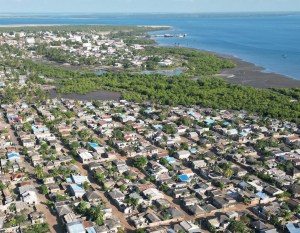
Tagbilaran City, Dauis and Panglao sit around the Panglao Island coastal waters, a designated Water Quality Management Area, in a province that receives more than a million tourists a year. Most homes and businesses rely on septic tanks that are rarely emptied, and flooding, storm surge and heat add to the risk of untreated waste reaching the sea.
The World Bank commissioned a citywide inclusive sanitation (CWIS) baseline and plan for the three local government units (LGUs), and the preparation of low-cost sanitation projects for the Government of the Philippines’ Accelerated Water and Sanitation Project in Selected Areas (AWSPSA).
Project info
- Client: The World Bank Group
- Programme: Accelerated Water and Sanitation Project in Selected Areas (AWSPSA), Government of the Philippines
- Period: February – April 2026
- Location: Tagbilaran City, Dauis and Panglao, Bohol Province, Philippines
Scope
The assignment covered the whole sanitation value chain: a desk review of earlier assessments, a single geospatial database for the three LGUs, climate risk analysis, sewered and non-sewered system suitability, containment, collection and transport, treatment planning, and the regulatory and institutional changes needed to sustain services. It then prioritised pilot projects and prepared two of them for procurement.
Services Delivered
Geospatial Database
We compiled administrative boundaries, settlements, barangay population, building footprints, roads, elevation, drainage, water bodies, land cover, soils and environmentally sensitive zones into one documented repository.
Climate Risk and Hotspot Analysis
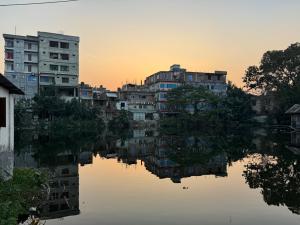
We mapped flooding, waterlogging, storm surge and heat stress against settlements and sanitation assets to produce location-specific risk profiles.
System Suitability and Containment Risk
We delineated areas suited to sewered, non-sewered, decentralised and nature-based sanitation, updated the Shit Flow Diagram, and ranked containment risk building by building using climate exposure, environmental sensitivity, accessibility and economic vulnerability.
Collection, Transport and Treatment Planning
We assessed desludging access by truck size and travel distance, proposed solutions for hard-to-reach areas, and set out a treatment siting and technology framework suited to tourism-driven waste loads, favouring modular, scalable designs.
Pilot Projects and Procurement
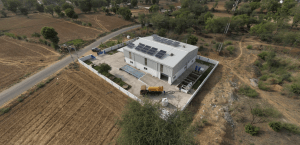
We evaluated the candidate pilots against programme budgets, timelines, impact, feasibility and land availability, prepared concept designs, cost and affordability analysis and business models (including public–private partnership options) for two pilots, and drafted their terms of reference and bid documents under World Bank procedures.
Regulation, Institutions and Engagement
We proposed a geospatially informed regulatory and monitoring framework with key performance indicators, assessed institutional capacity, and ran field validation and stakeholder consultations in all three LGUs, closing with a dissemination workshop.
Results
- A citywide sanitation plan and atlas for Tagbilaran City, Dauis and Panglao, built on one shared geospatial database.
- Building-level containment risk and desludging serviceability maps to target investment.
- Concept designs, business models and draft procurement documents for two low-cost pilot sanitation projects.
- Recommendations on regulations, ordinances and tariffs for regular septic tank emptying.