How big is the problem of safe sludge handling and use?
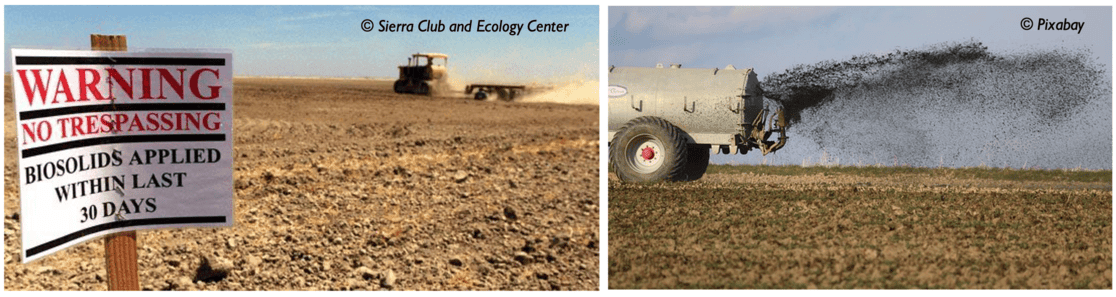
I recently had the opportunity to present our project work and was asked by a senior government official about best practices for sludge handling in developed countries such as the US and UK, and in other technologically advanced water industries worldwide. Drawing on my recent introduction to the Omni Processor (OP), I was also able to share details on the use of processed sludge on agricultural land and in other non-edible applications, including the various categories of biosolids applications in other parts of the world.
The next pertinent question was how to ensure that processed municipal sludge is free of pathogens and low in heavy metals. Otherwise, the quality of food produced could be compromised and vector-borne disease transmission could increase, leading to significant health risks for communities at large. Following this meeting, I looked more deeply into the subject and found a range of research findings. For instance, in the UK, treated sludge is estimated to contain 69–80% of the microplastics entering wastewater treatment works, and nearly all of the microplastics in sludge spread on land eventually find their way into aquatic environments. Apart from agricultural use, incineration, land reclamation and industrial applications are among the other disposal routes for sludge.
The Government of India (GoI) has been ambitious and proactive in ensuring the construction of sewage treatment plants (STPs) in most cities and towns, using a mix of schemes such as the Atal Mission for Rejuvenation and Urban Transformation (AMRUT), the National Mission for Clean Ganga (NMCG) and the Swachh Bharat Mission – Urban (SBM-U). This is expected to result in a substantial increase in dewatered sludge volumes from municipal treatment infrastructure. Consequently, there will be a growing need for landfills to dispose of the sludge, which still contains pathogens and remains a potential source of contamination through several pathways until it is safely treated and used.
Experiencing sludge handling challenges from case examples
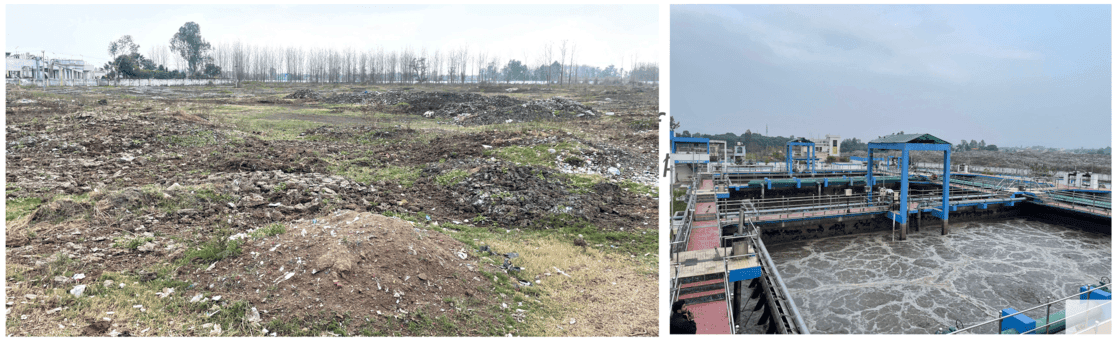
I visited some newly built STPs in Haridwar and Rishikesh a few days ago. These plants, the first of their kind built under the Hybrid Annuity Model (HAM), were a source of pride for the operators. The plants were impressive and appeared to be working efficiently, except for the safe disposal of dewatered sludge. This sludge was piled up in the open, posing a high risk of reaching groundwater or nearby rivers through runoff, as well as polluting the soil. This situation highlights the need for safe treatment of municipal sludge at treatment plants to prevent untreated sludge from mixing with rainwater and polluting the environment again, despite advanced treatment infrastructure being in place.
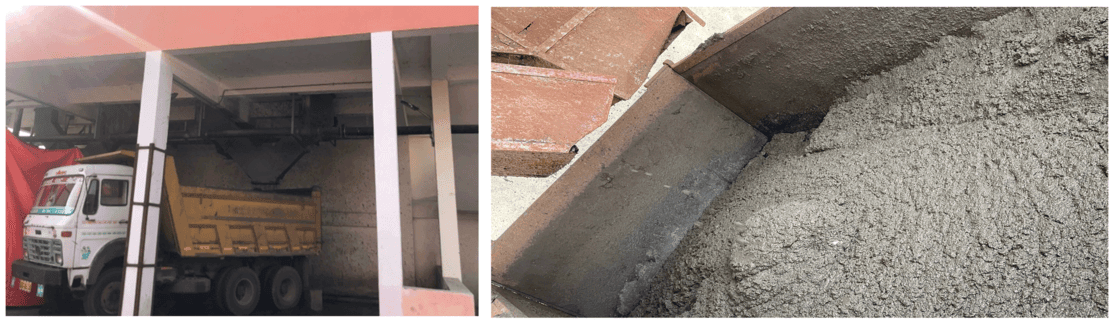
In another example from Jaipur, Rajasthan, the state’s largest sewage treatment plant (approximately 100 million litres per day, or MLD, capacity) offloads dewatered sludge to a distant landfill site using a fleet of trucks that operate constantly alongside plant operations. This is often the default choice for municipal administrations, as rising land prices make it difficult to establish drying beds next to treatment plants to handle such large volumes of dewatered sludge.
Innovations led by BMGF
Recognising the global issue of safe handling of municipal sludge (from both STPs and faecal sludge treatment plants, or FSTPs), the Bill & Melinda Gates Foundation (BMGF) has supported pilot projects to establish the world’s first Omni Processor plants in Dakar (Senegal), followed by demonstration plants in Vadodara (India) and Cox’s Bazar (Bangladesh).
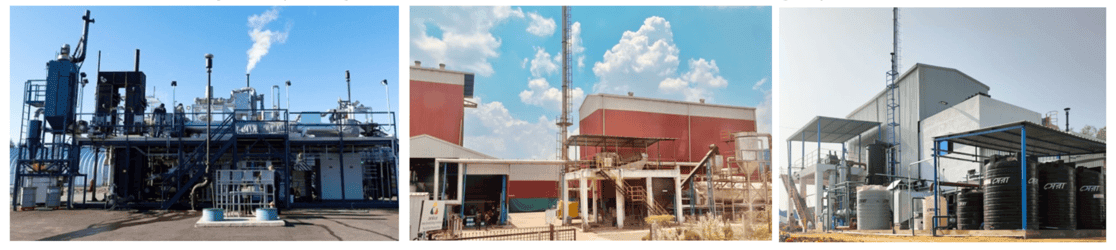
The Combustion-based Omni Processor (C-OP) at Vadodara (India) combines three processes: sludge treatment through combustion, gasification of segregated dry waste, and steam-based power generation.
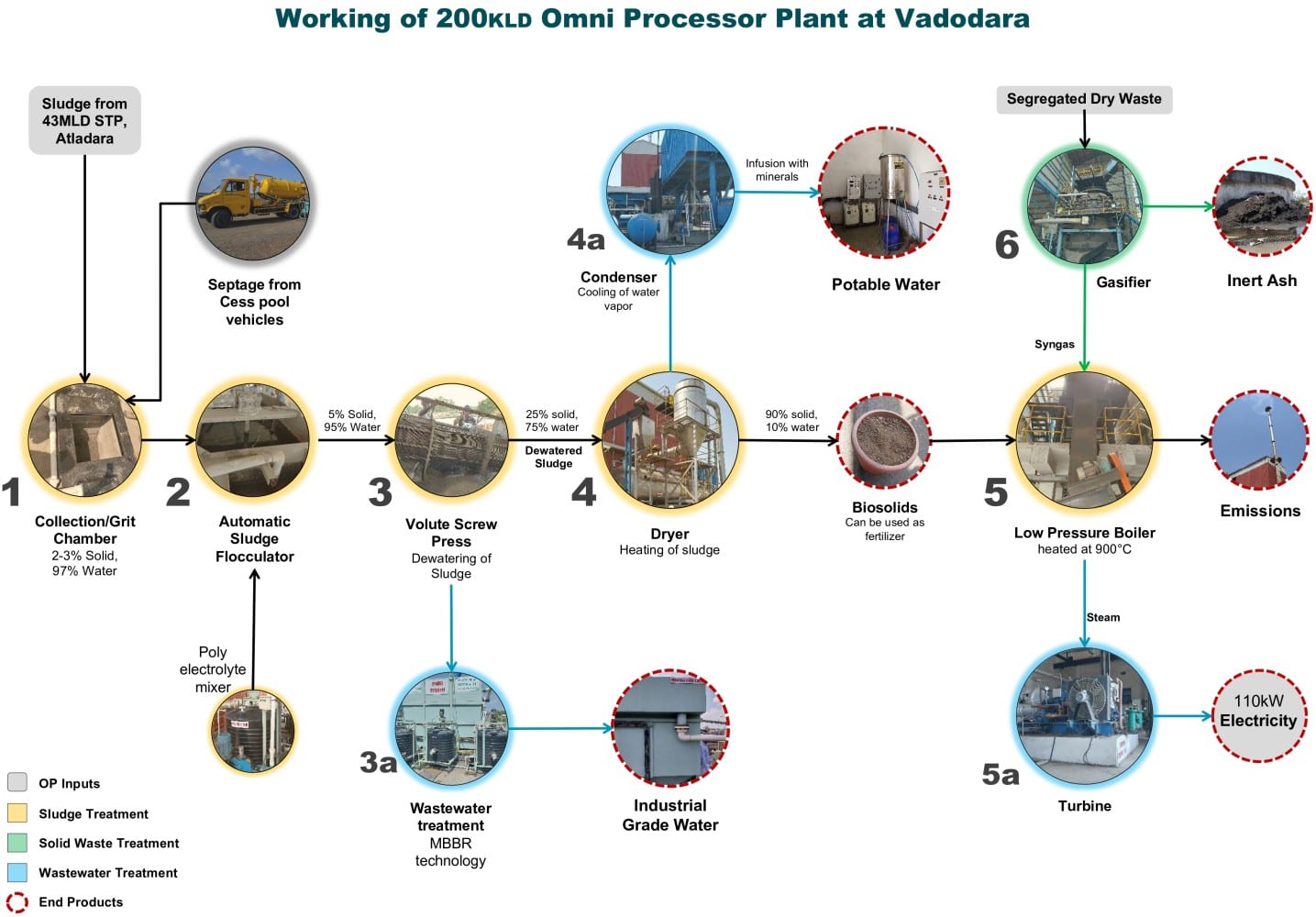
Sludge from a nearby STP, along with occasional loads of septage from cesspool trucks, serves as input for the Omni Processor plant. After dewatering through a screw press, the moisture content of the sludge is reduced to approximately 75%. The water from the dewatering process is treated in a moving bed biofilm reactor (MBBR) and reaches industrial-grade quality. The dewatered sludge is then processed further in a paddle dryer, where it is heated by high-pressure steam. The output is biosolids with moisture content reduced to 10%. Recent laboratory tests by Ankur Scientific found no pathogens in the results.
The dried biosolids are then used as input for the boiler. By combining the biosolids with syngas (output from the gasifier) as an auxiliary fuel, the required calorific value for combustion is achieved. The heat from combustion produces steam, which powers a turbine to generate electricity. Surplus electricity can be supplied to the grid or used locally. The steam is then transferred to the drying process, completing the cycle. At the same time, the water evaporated in the dryer is captured through a condenser and, after mineral infusion, reaches drinking water quality. The key challenge at the Vadodara plant is the erratic solids concentration in the sludge inputs from both STPs and cesspool trucks. This fluctuation in input quality significantly affects the subsequent processes.
The C-OP system is designed to be energy-neutral and is largely automated, requiring minimal staff for daily operations. It eliminates pathogens and reduces sludge volume by up to 90%, converting it into fly ash with multiple reuse applications. In Senegal, the fly ash is used to make paver blocks and tiles, while the water serves as a high-quality coolant for cars. Because of their small footprint, C-OP systems can likely be accommodated within existing STPs or FSTPs, where they can be operated with minimal or no additional staff, significantly reducing operational expenditure.
What else can be done to attain system viability: Illustrations of clustering benefits
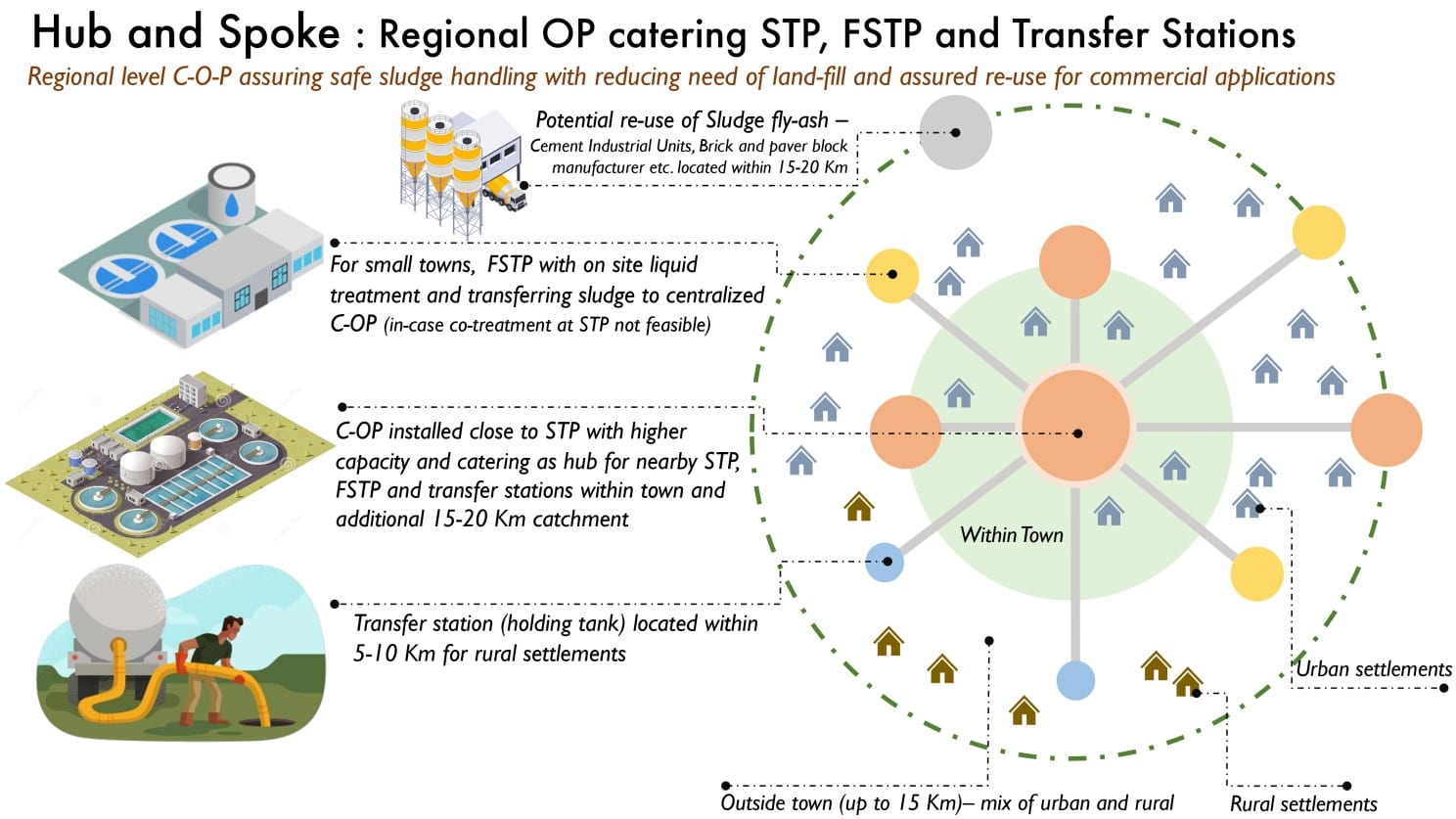
Experience from an ongoing project in one of the states of India shows that a clustering approach is a more suitable way to achieve the scale needed for system viability. The cluster approach can connect sludge from nearby (within 15–20 km) STPs and FSTPs, potentially with transfer stations as collection points. This creates a centralised sludge handling facility serving a regional scale, including rural settlements through the transfer stations. The approach not only improves operational economics by reducing transport costs and eliminating the need for landfills, but also offers strategic positioning advantages by keeping such plants close to potential reuse applications. Fly ash, for example, can be used in brick, paver block, cement and road construction, which are common in urban centres.
System Challenges and Future Outlook
- The calorific value of municipal sludge varies considerably, with recent tests by the Consortium for DEWATS Dissemination (CDD) Society showing an average value of 11–14 MJ/kg (for reference, coal has a calorific value of around 25–35 MJ/kg and wood pellets 16–22 MJ/kg). This presents an opportunity to harness energy through combustion, but uninterrupted burning in the boiler may require external auxiliary fuel. In Vadodara and Cox’s Bazar, Ankur Scientific (a C-OP licensee) added a gasifier to process municipal solid waste and recover energy through gasification, potentially eliminating this external dependency.
- The current capital expenditure for C-OP systems is too high for municipal systems to adopt without additional funding support. Designing C-OP systems for optimal working hours may reduce the required capacity, resulting in lower capital expenditure. Furthermore, C-OP systems can function in extreme weather conditions and significantly reduce greenhouse gas emissions by treating large volumes of dewatered sludge safely, creating opportunities to draw on climate funds for implementation, particularly in ecologically sensitive areas with land constraints.
- Regulatory provisions on safe biosolids use are absent in countries such as India, Bangladesh and Nepal, leading to inadequate enforcement of safe disposal of dewatered sludge. Setting pathogen-free requirements for specific uses would encourage the adoption of C-OP and similar technologies.
- Global licensing for C-OP is currently limited to a few players, such as Sedron Technologies (US) and Ankur Scientific (India). The worldwide challenge of safely handling municipal sludge requires more local and regional commercial partners to set up and operate these systems efficiently at an optimal cost. Building capacity and creating a supportive market at local level is crucial for scaling up and accelerating the implementation of reliable systems globally, allowing for continuous improvement and optimal system performance in the long run.
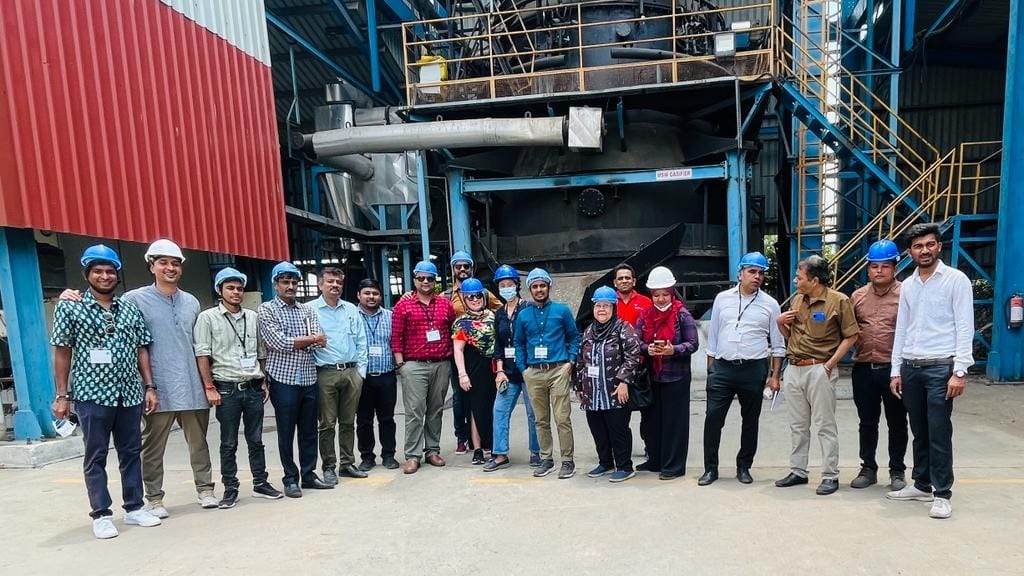
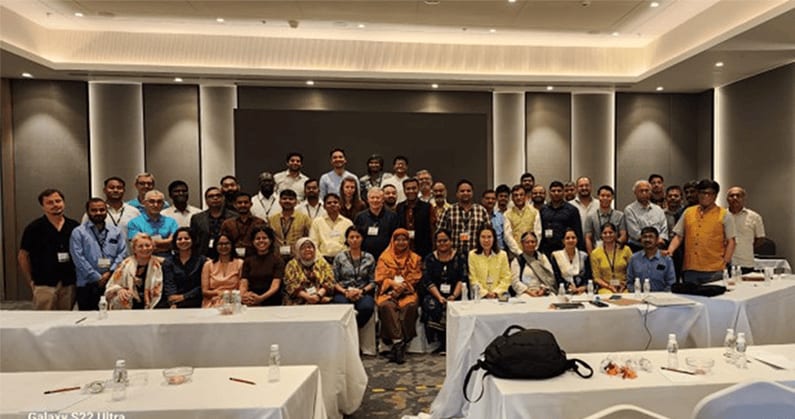
The Bill & Melinda Gates Foundation organised a workshop in Vadodara (India), inviting global practitioners, planners and thinkers (“OP Warriors”) to understand and discuss the C-OP system. The goal was to identify the next course of action for establishing safe and complete municipal sludge handling practices worldwide.
Update (2026)
We are now building a VR tour, on-site kiosk and live digital twin dashboard for the Pyrolysis Omni Processor faecal sludge treatment plant at Narsapur, Andhra Pradesh. Read the case study.