Introduction
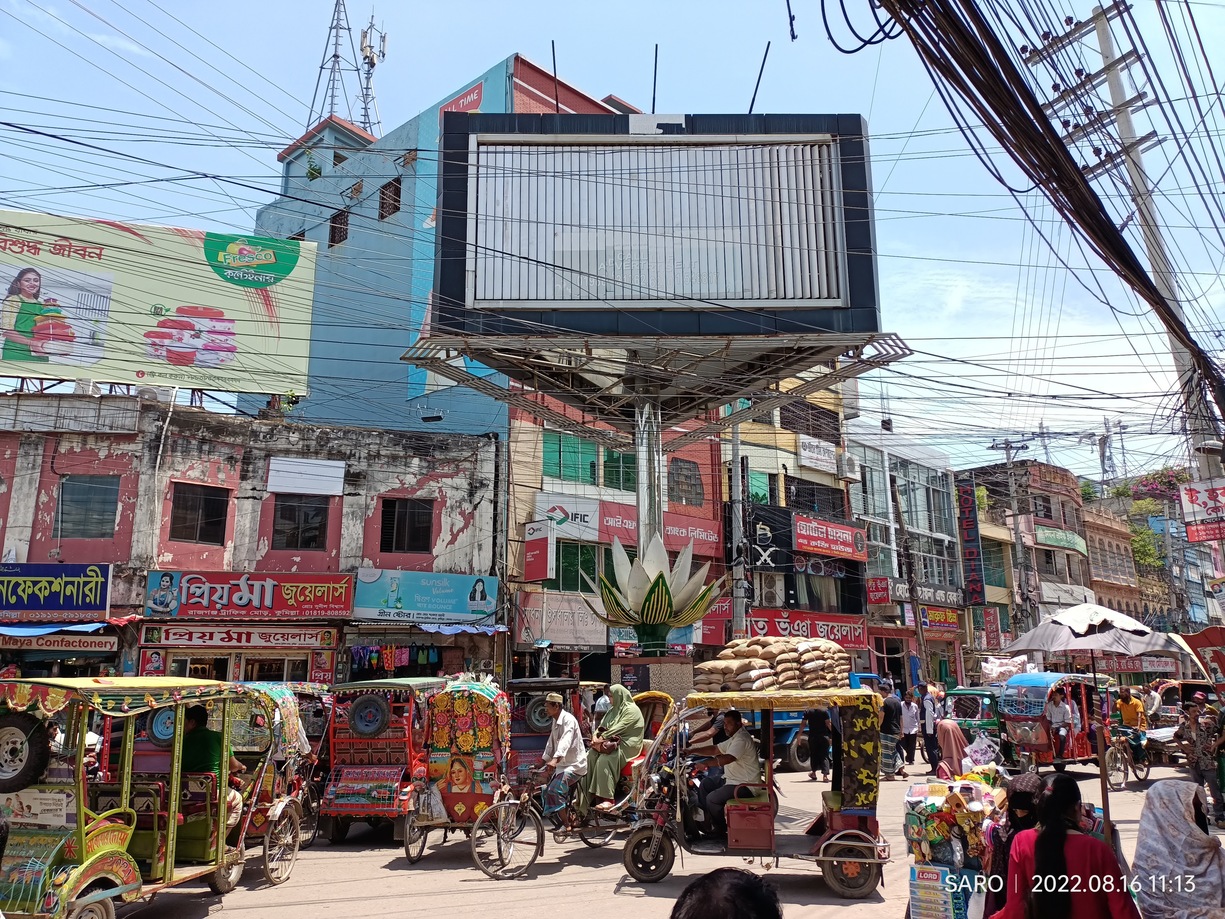
Cumilla, Natore and Lakshmipur together house more than half a million people (2011 Census), and whether their faecal sludge is safely contained, emptied, transported and treated decides whether it ends up in drains and water bodies. Before investing, the financiers needed to know how well the existing institutions and regulations could support citywide inclusive sanitation (CWIS), and what environmental, social, financial and climate risks the investment would face. The three municipalities range from Cumilla, with 27 wards, to coastal Lakshmipur (12 wards) and Natore (9 wards).
Project info
- Client: IsDB and TA Hub
- Funder / programme: Islamic Development Bank (IsDB) and Livelihoods Fund (LLF)
- Period: Dec 2021
- Location: Cumilla, Natore and Lakshmipur, Bangladesh
Scope
The project addressed faecal sludge management (FSM) service chains in three towns, with financial support from the Livelihoods Fund (LLF) and the Islamic Development Bank (IsDB). It included preparing an Environmental and Social Management Plan Framework for the towns, assessing financial and climate-related risks, evaluating whether the existing Institutional and Regulatory Framework (IRF) is fit for CWIS implementation, and examining the coverage and sustainability of the FSM service value chain. The aim was to improve faecal sludge management, reduce environmental impacts and improve sanitation services in the three towns.
Did You Know?
- Cumilla is an important transportation and educational hub in Bangladesh, with a number of renowned institutions, including Comilla University.
- Natore is a major centre for jute cultivation and jute-related industries, contributing significantly to the country's economy.
Services Delivered
Project Initiation and Planning
The first phase covered stakeholder mapping, finalising the work plan and selecting the tools needed for implementation.
Literature Review and Best Practices
We reviewed the literature to identify best practices from other towns, standard CWIS frameworks and relevant policy and institutional documents.
Analysis of Legal, Institutional, Policy and Regulatory Documents
We analysed the legal, institutional, policy and regulatory documents to give a sound basis for planning and implementation.
Questionnaires for Key Informant Interviews (KII)
We drafted questionnaires for key informant interviews, distributed them to the municipalities and later collected them. They were a key source of information for the study.
Field Visits and Data Validation
We made detailed field visits to the project towns to validate data and identify gaps in the information collected in the earlier phases.
Final Report and Geospatial Analysis
Consultations with partners shaped the findings, and the final report incorporated feedback from the TA Hub. Geospatial analysis informed the CWIS plans for each town.
Results
- An Environmental and Social Management Plan Framework for the three towns.
- An assessment of financial and climate-related risks.
- An evaluation of the Institutional and Regulatory Framework (IRF) for CWIS, and of the FSM service value chain.
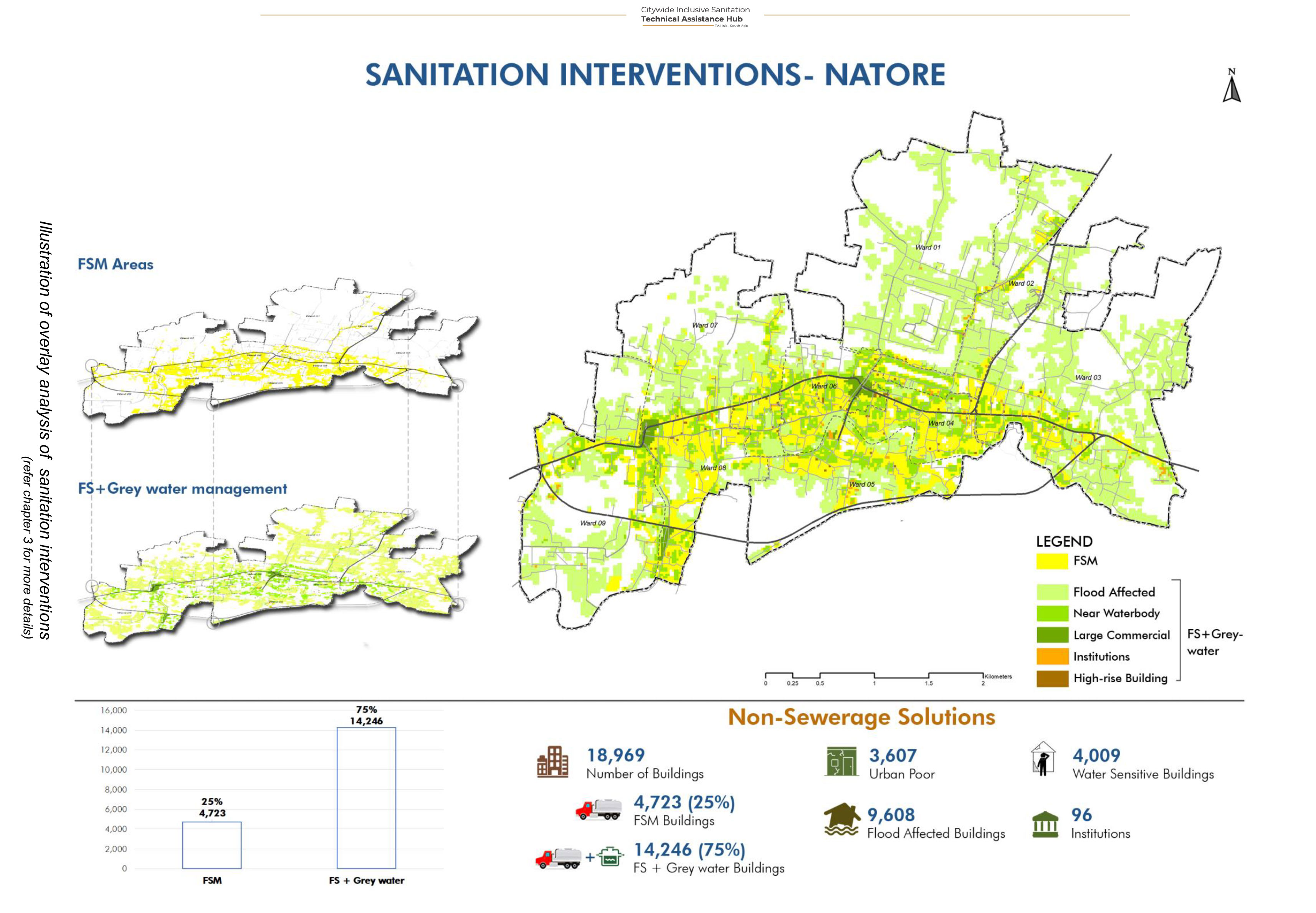
- Geospatial maps of FSM areas and combined faecal sludge and greywater management zones, used to define sanitation interventions.
- A final report, revised with TA Hub feedback.
Work Illustration
The map shows FSM areas and combined faecal sludge and greywater management zones within the town, defined using multiple parameters. The output comes from two stages of analysis, which were overlaid to determine the final sanitation interventions.