Introduction
Large parts of Dhanbad and Ramgarh lie outside the areas covered by planned sewerage, and households in these non-sewered settlement (NSS) areas depend on on-site systems with no planned route for safe emptying, treatment or greywater disposal. Without a plan for these areas, the proposed sewerage investments would leave many residents, particularly marginalised groups, without safe sanitation. The two towns are in Jharkhand, where the Jharkhand Urban Infrastructure Development Company (JUIDCO) aims to provide safe sanitation to the entire population.
Project info
- Client: Asian Institute of Technology – Global Water & Sanitation Center (AIT-GWSC)
- Funder / programme: Gates Foundation grant, supporting JUIDCO
- Innpact role: Sub-consultant and technical service provider
- Period: Apr 2023 – Jun 2023
- Location: Dhanbad and Ramgarh, Jharkhand, India
Scope
The project addressed sanitation in Dhanbad and Ramgarh beyond the conventional sewerage network, focusing on the settlements that lie outside it. The team studied these non-sewered settlement (NSS) areas and prepared inputs to a concept report and a citywide inclusive sanitation (CWIS) spatial analysis report for JUIDCO. The objective was to align interventions in NSS areas with the proposed sewerage works, extending sanitation access to all residents, with particular attention to marginalised groups.
Did You Know?
- Dhanbad is often referred to as the "Coal Capital of India"
- Dhanbad has the Second Richest Railway Division in India
- Dhanbad is the second-most populated city in the Indian state of Jharkhand.
Services Delivered
Integrated Sanitation Approach
A citywide strategy was adopted for Dhanbad and Ramgarh to integrate non-sewered sanitation (NSS) with the proposed sewerage infrastructure, prioritising safe sanitation for marginalised communities.
Geospatial Database Development
A geospatial database was built as the basis for sanitation planning, identifying areas with sanitation problems and supporting informed decisions.
Risk Mapping and Safe Containment
Composite risk mapping identified the areas within the project towns that needed urgent sanitation improvements, considering vulnerability, flood risk and disadvantaged households. Safe containment strategies were then proposed for these areas.
Public Toilet Assessments and Sludge Management
Public toilet facilities in the project towns were assessed for condition and footfall. The analysis informed plans for sludge collection and management and recommendations for upgrades and new She-Toilet blocks.
Institutional Reforms and Social Inclusivity
Institutional reforms were recommended, with an emphasis on social inclusion, to support the long-term sustainability and inclusivity of the proposed sanitation solutions.
Greywater Management
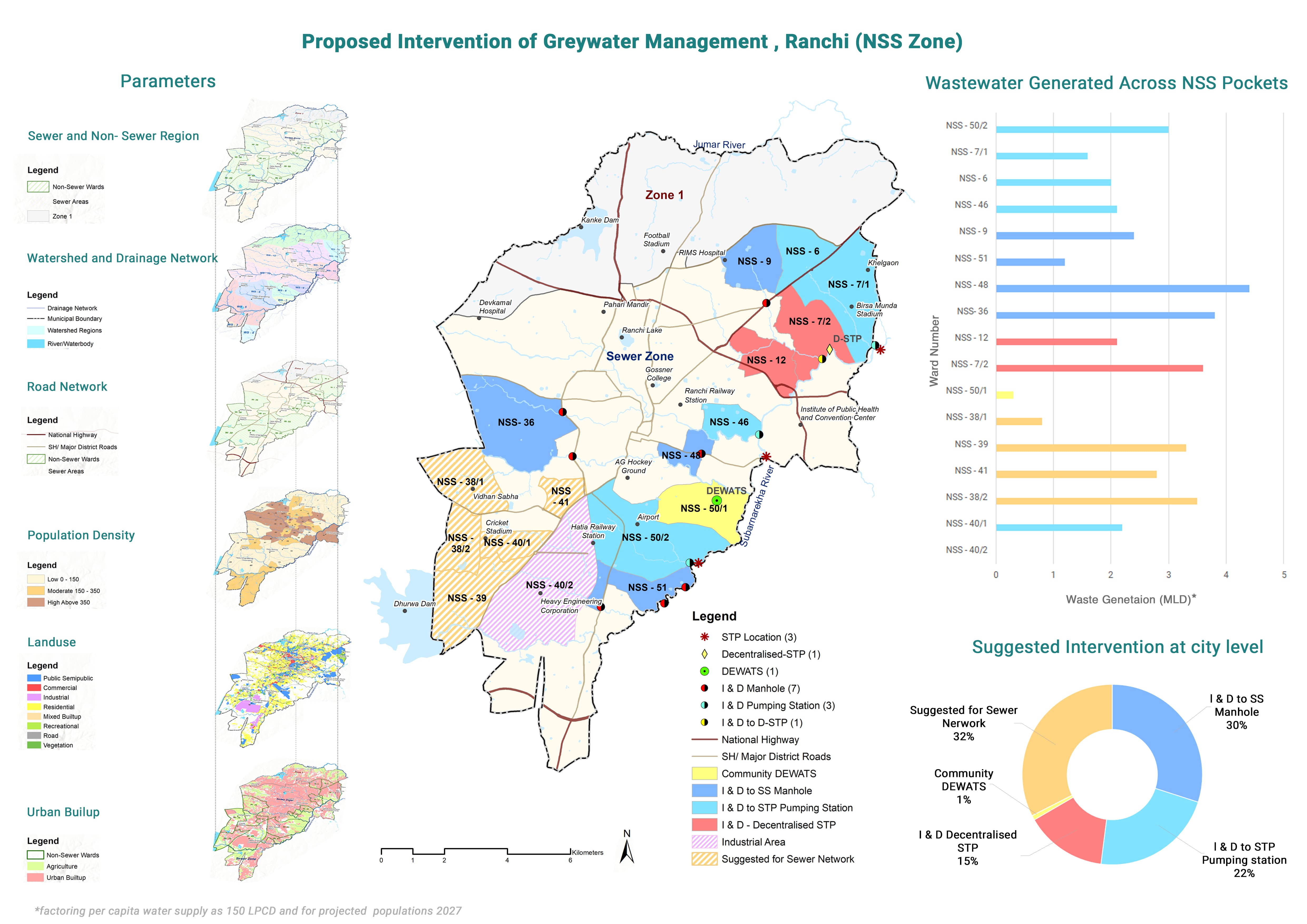
Greywater management options were assessed for integration with the sewerage infrastructure, and dedicated solutions such as interception and diversion (I&D) and DEWATS were proposed where suitable.
Results
- Sewered and non-sewered zones validated, and the relevant sections of the concept report and preliminary project report prepared for JUIDCO.
- Composite risk maps and a safe containment plan prepared for the non-sewered areas.
- Public toilet coverage assessed, with recommendations for upgrades and new She-Toilet blocks.
- Collection, transport and treatment plan prepared, covering truck accessibility, routes and siting of treatment plants.
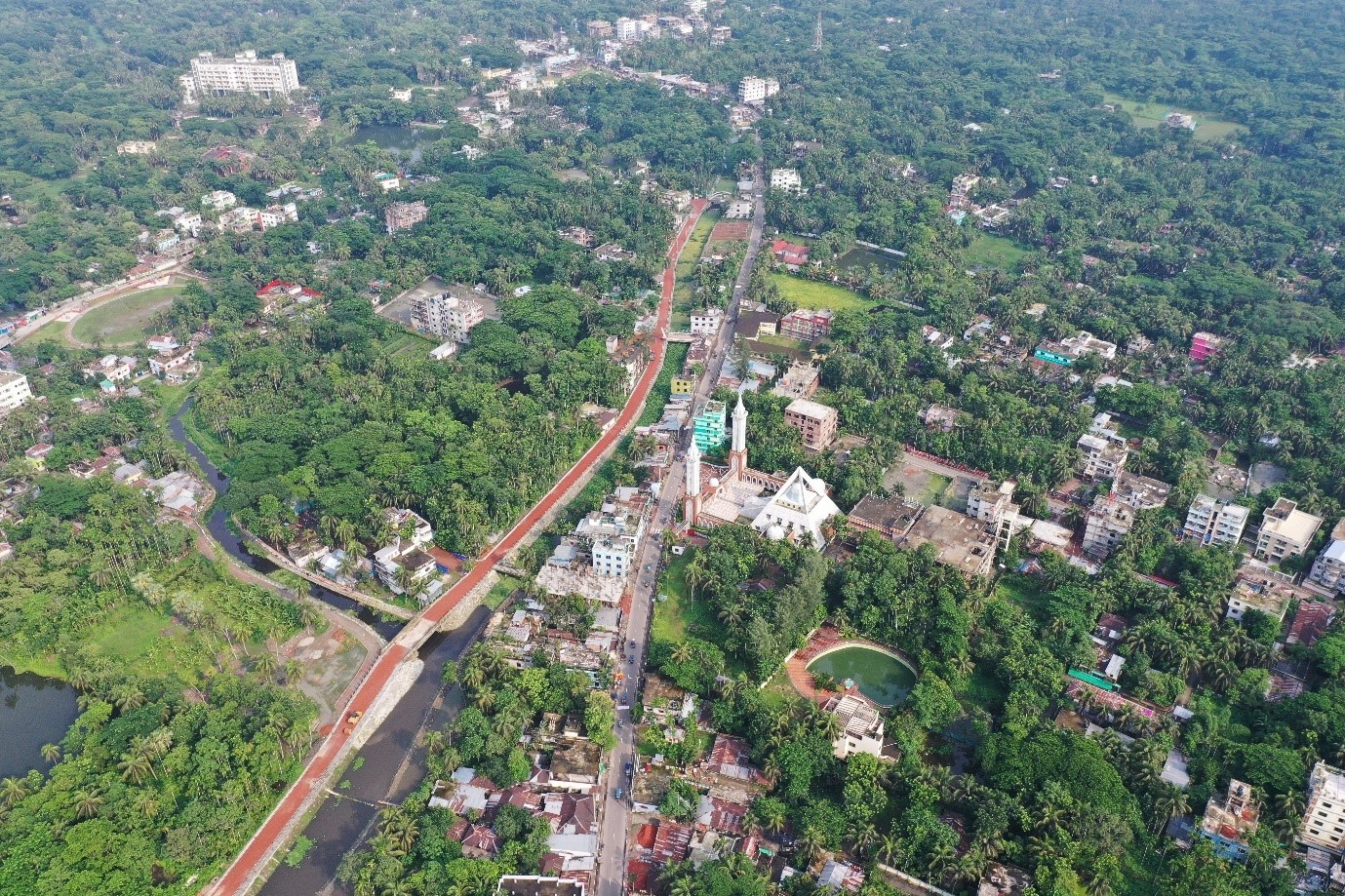
- Findings validated in the field through household surveys, drone imagery of non-sewered pockets and key informant interviews.
Work Illustration
A decision support tree guided the choice of greywater management interventions, such as interception and diversion-based treatment and DEWATS, in pockets of the non-sewered sanitation zones of the project towns.