Introduction
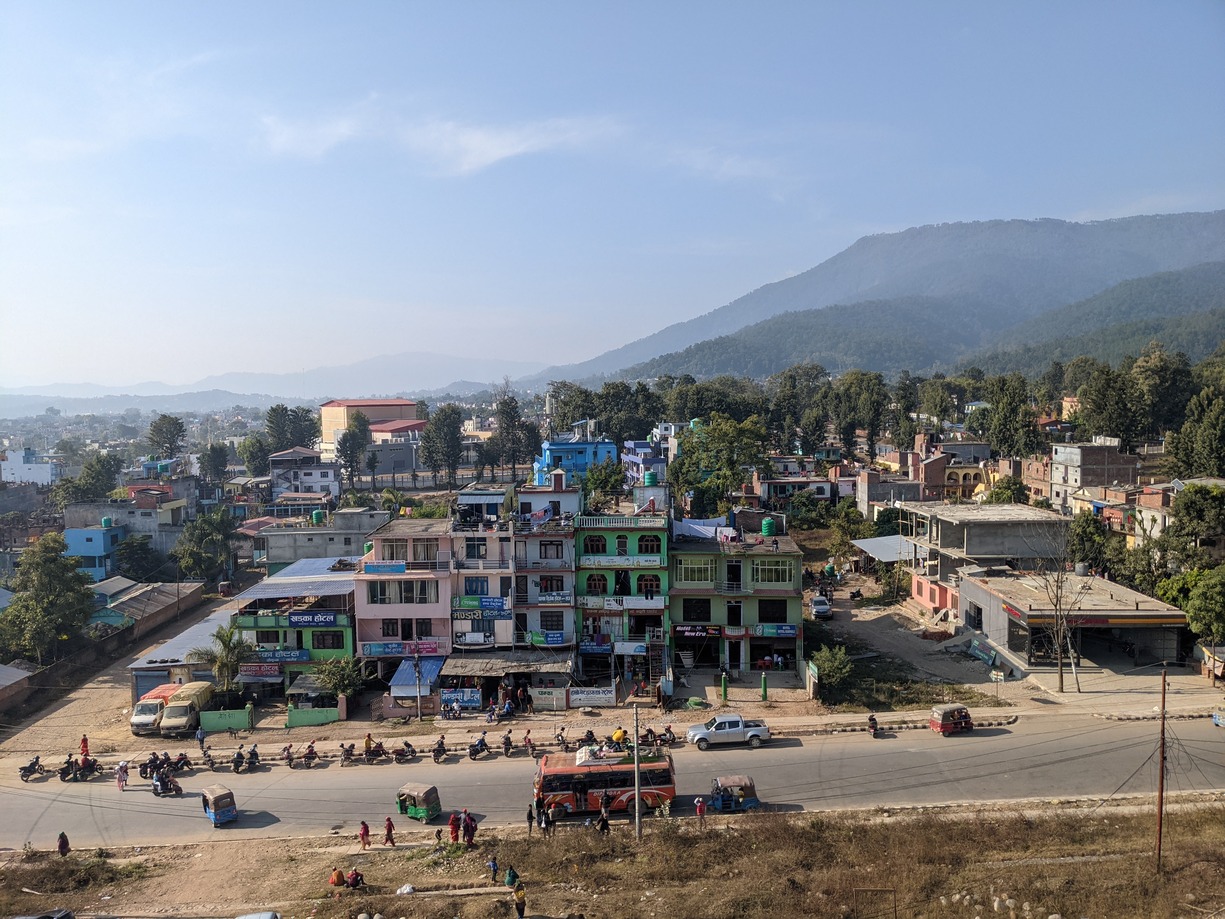
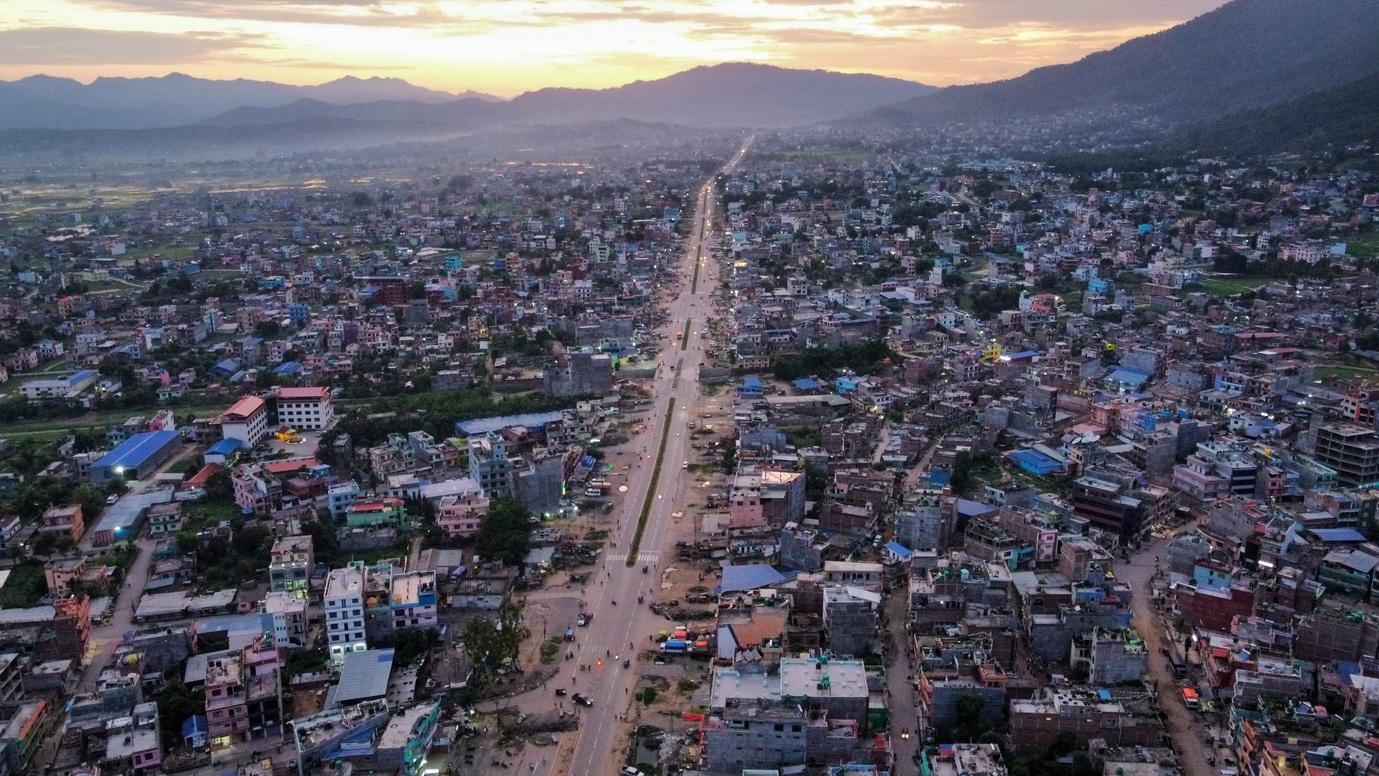
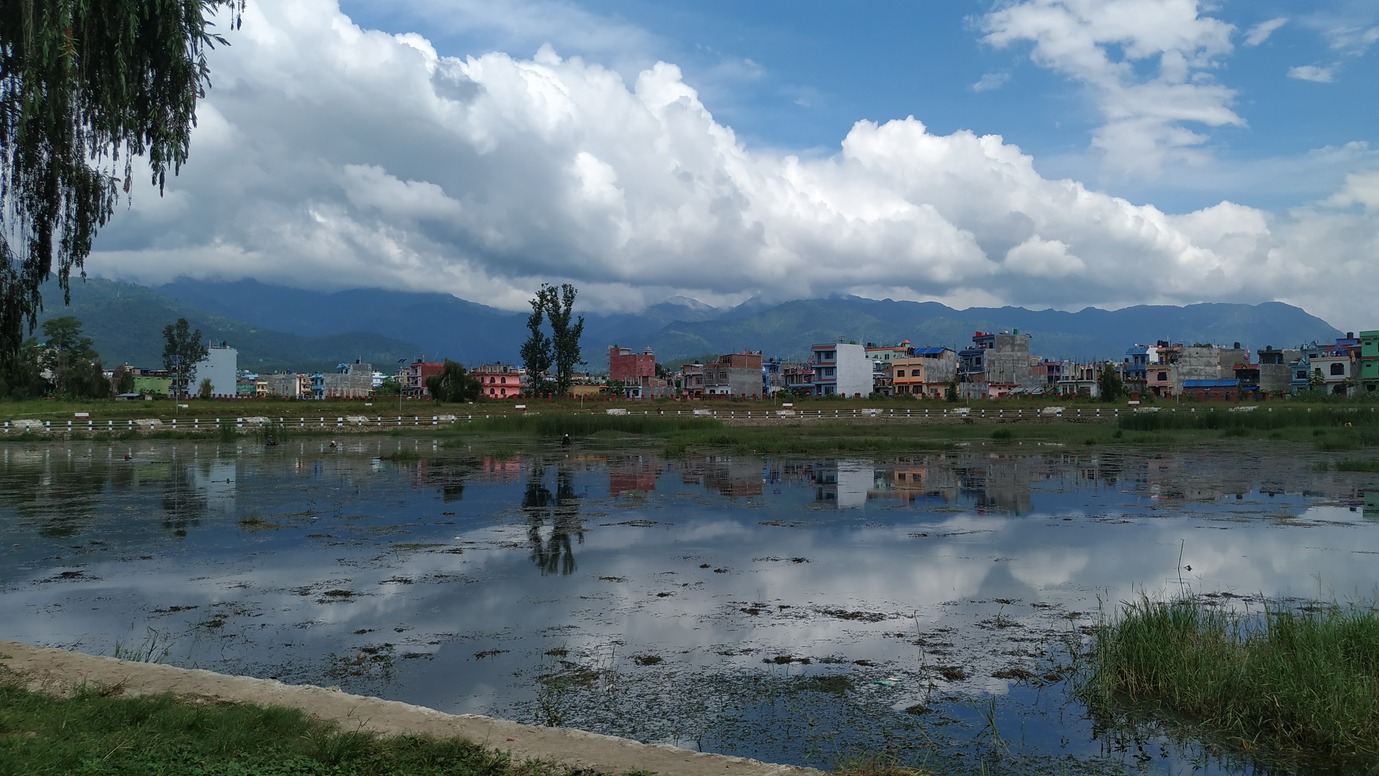
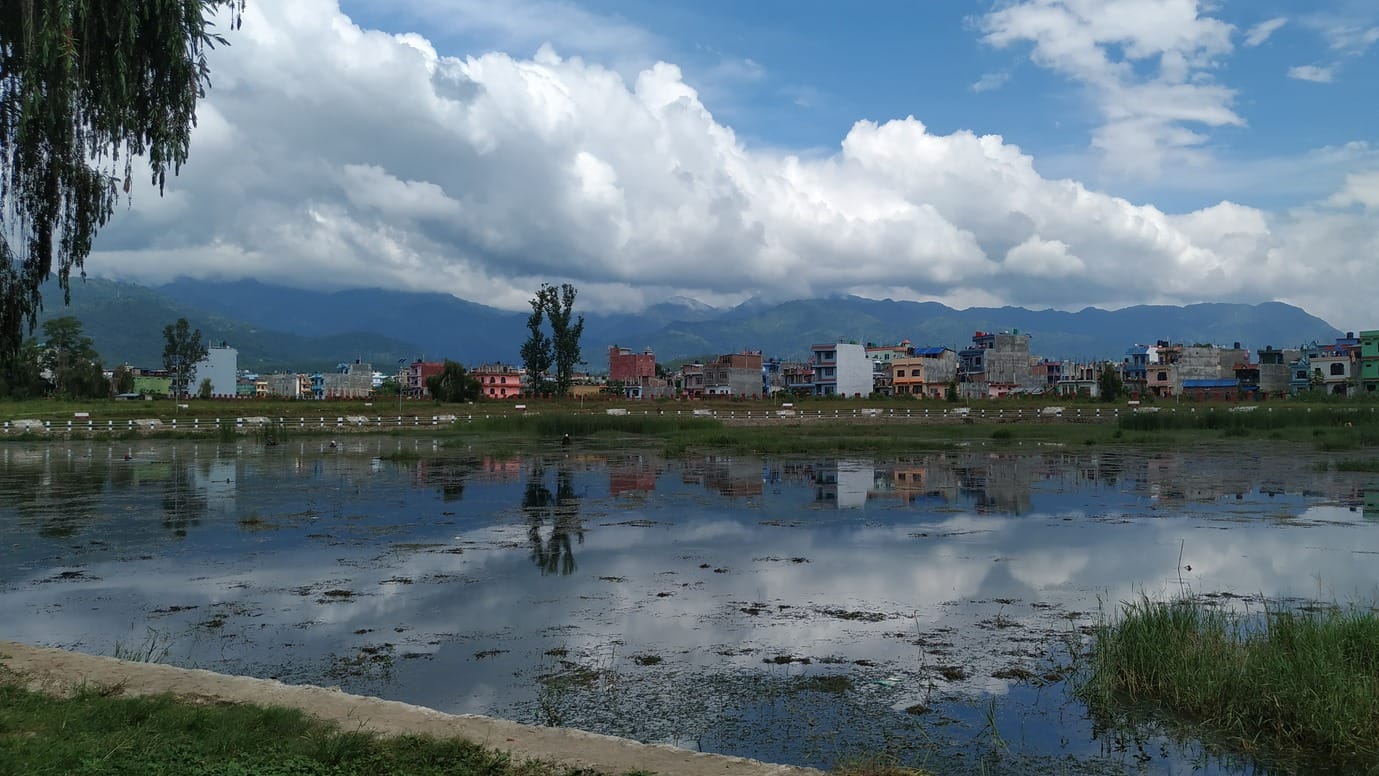
Birendranagar is one of Nepal’s fastest-growing urban centres, and its sanitation planning has to serve both a dense core and dispersed settlements spread from 375 to 1,672 metres above sea level. Poorly maintained waterbodies in the town show the need for better wastewater and greywater management, and the municipality needed a clear basis for deciding where sewers, faecal sludge management or other solutions fit. The municipality, the capital of Karnali Province, covers 253.4 square kilometres in 16 wards and had a population of 100,458 at the 2011 Census.
Project info
- Client: TA Hub
- Funder / programme: World Bank, Nepal Urban Governance and Infrastructure Project (NUGIP)
- Period: Jan 2022
- Location: Birendranagar, Surkhet district, Karnali Province, Nepal
Scope
Under the Nepal Urban Governance and Infrastructure Project (NUGIP), and in partnership with the TA Hub, a citywide inclusive sanitation (CWIS) plan was developed for Birendranagar. The plan formed part of a broader programme covering programme development, institutional capacity, fiscal capacity, emergency response readiness and infrastructure upgrades in the region.
The aim was an inclusive approach to sanitation in Birendranagar that prepares the town for urban growth, while also strengthening its overall preparedness and resilience.
Did You Know?
- The municipality covers the entire intermontane basin of Surkhet, a dun valley.
- Birendranagar has earned a reputation as one of Nepal's fastest-growing urban centres.
- The town is home to educational institutions, making it an educational hub for the province attracting students from various parts of Nepal.
Services Delivered
Spatial Analysis for Suitable Sanitation Interventions
Work Package 1 involved a detailed spatial analysis of Birendranagar to identify sanitation options suited to its geography and demography.
Technology Recommendations for the Sanitation Service Chain
Technology recommendations were made for each stage of the service chain, matched to the town’s needs.
Sewer and Non-Sewer Interventions
The project developed an initial plan covering both sewer and non-sewer interventions, reflecting the town’s varied sanitation needs.
Assessment of Available Data for the Integrated Municipal Information System (IMIS)
Work Package 2 assessed the existing data needed to set up the Integrated Municipal Information System (IMIS).
Data Collection and Integration
The project proposed efficient data collection methods to make the data available and accurate for IMIS integration.
Data Sharing Potential Between IMIS and NWASH Platforms
The project explored data sharing between IMIS and the National Water, Sanitation and Hygiene (NWASH) platform to support information exchange within the sector.
Results
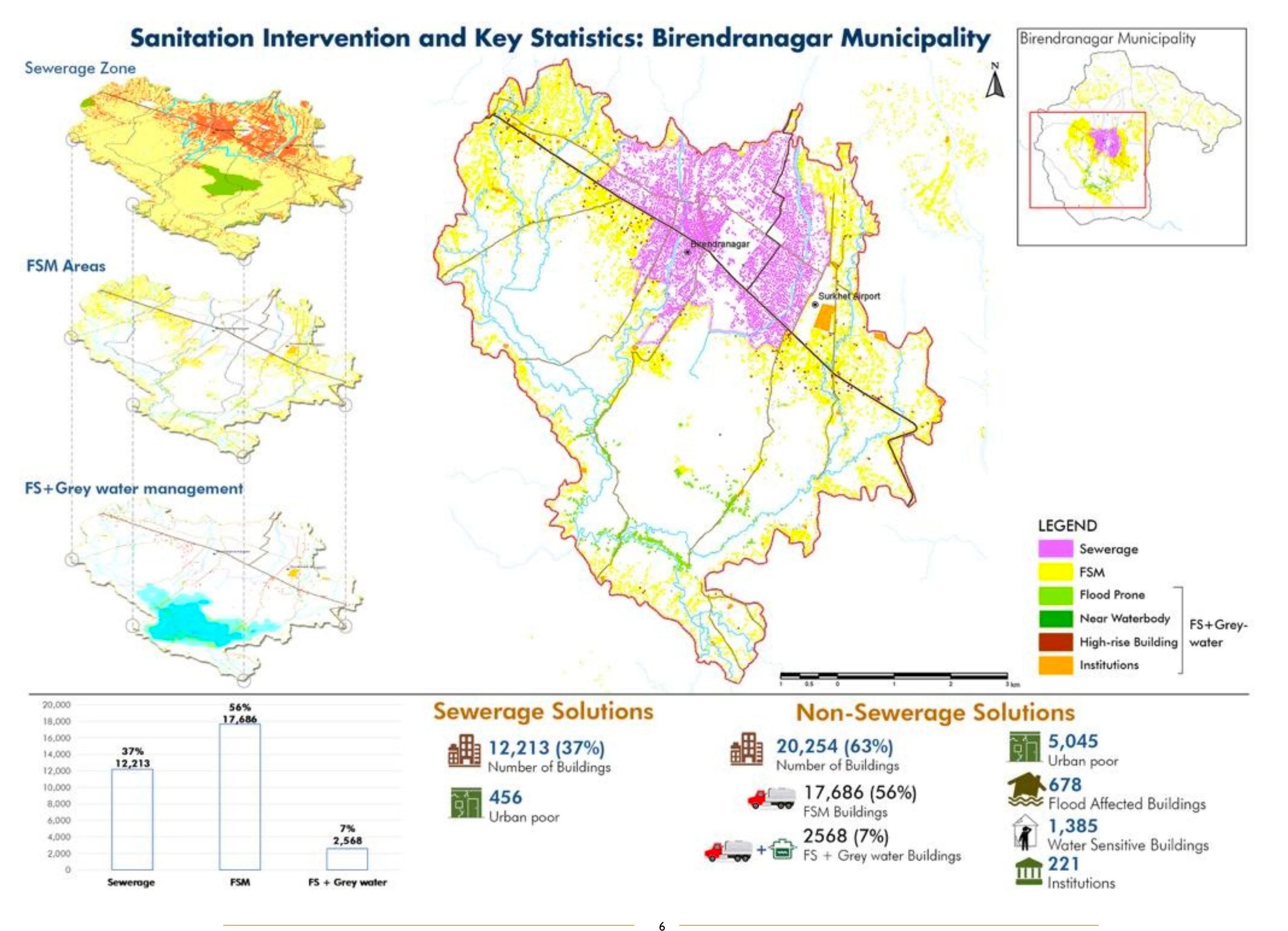
- Sewerage zones, faecal sludge management (FSM) zones and combined faecal sludge and greywater management zones delineated across the town.
- Technology recommendations delivered for each stage of the sanitation service chain.
- Initial plan for sewer and non-sewer interventions prepared.
- Available data assessed for IMIS, with proposed data collection methods and options for data sharing with the NWASH platform.
Work Illustration
Multiple parameters were considered to define the final sewerage zones, FSM areas, and faecal sludge and greywater management zones within the town. Outputs from three stages were overlaid to define the final interventions. Areas suitable for faecal sludge and greywater management are those outside the sewerage and FSM zones.